
History of Mañana Lodge: 4760 Brenton Page Road, Ladysmith, British Columbia
Archaeological evidence indicates that the lands around what is now known as Ladysmith Harbour (called Oyster Harbour by the British Hydrographic Survey of 1859) have been occupied by First Nations for over 5000 years. The area is at the centre of traditional territory claimed by the Stz’uminus First Nation with village sites at shts’emines (Kulleet Bay), thek’min (Shell Beach) and xetl’netsten (Ivy Green).
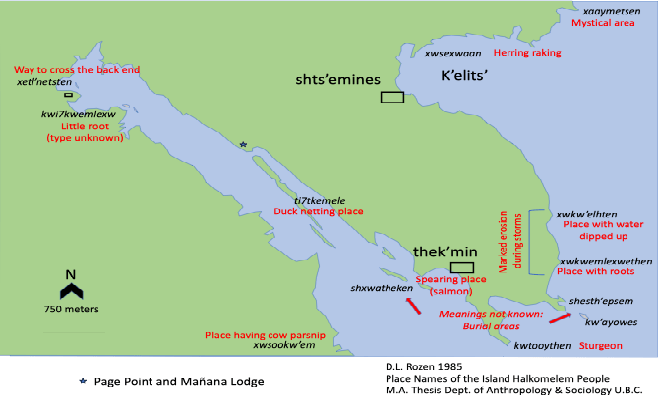
White settlement of the harbour area commenced in the 1860s, but it was not until the following decade that government controlled settlement began. in 1873 David Page, a pioneer settler, pre-empted 160 acres which included what is now called Page Point. He and his First Nation partner, Susan Sampson, together erected a log cabin and cleared some land for cultivation. He also farmed the native Pacific Oysters which were abundant in the harbour. Crown Grant of the land was finalised in 1885. David Page’s fascinating life story is chronicled in Gary Backlund’s booklet “The Wonderful History of Page Point”.
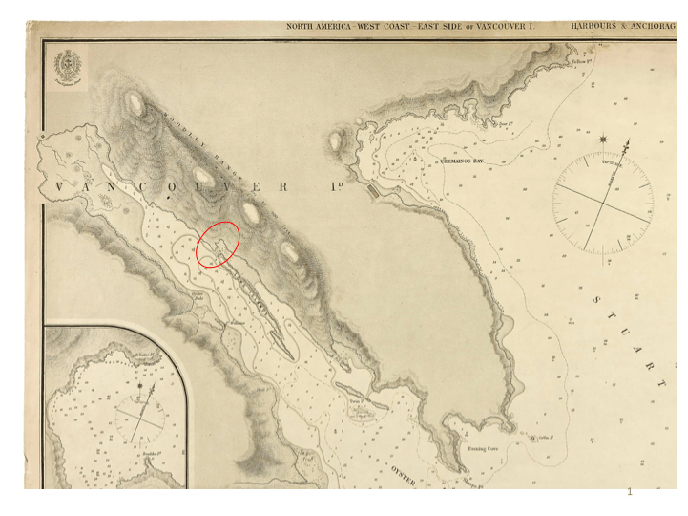
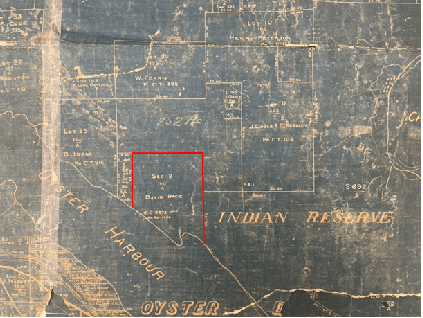
In 1911 David Page retired to live in Ladysmith and in 1912 sold his 160 acre farm for $20,000 ($125 per acre) to Oyster Harbour Collieries which apparently had hopes of finding coal on the property. Testing was done but nothing worthwhile materialised.
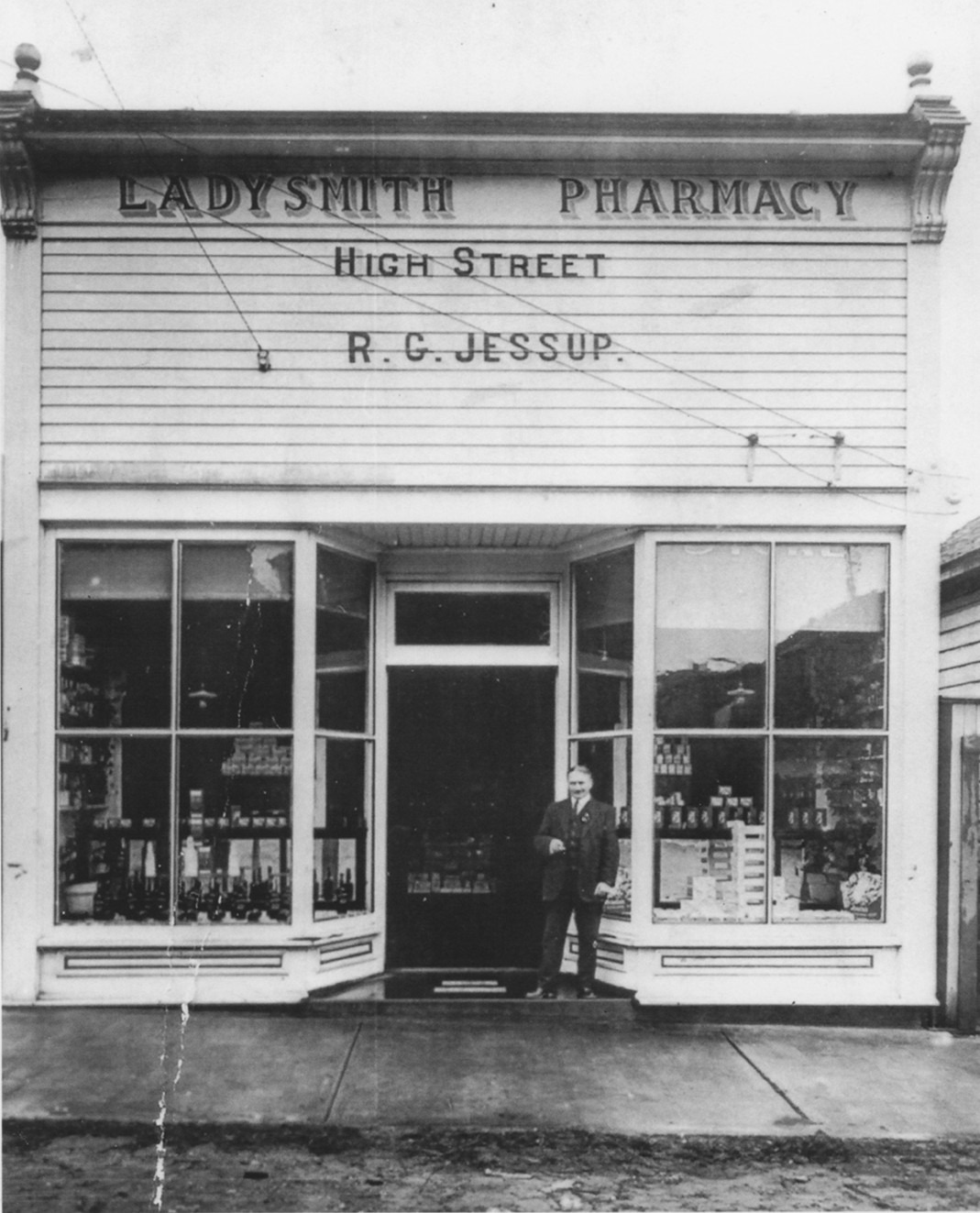
In 1921 the property was sold to Richard Grant Jessup, who owned a pharmacy in Ladysmith.
Jessup and his family did not live on the farm. Joe and Eva Grouhel rented it from about 1920 to 1923, with their two sons Joe Jr. and Bill being born there. After the Grouhels moved to Ladysmith, a Russian Family, the Krjivitzkys, moved to the farm with their two daughters Vera and Marina. The two young girls grew up at Page Point and were known to row across the bay to attend school in Ladysmith.

Vera had many fond memories of Page Point and the Woodley Range. Gary Backlund’s history of Page Point details an interview with her describing the property during the Krjivitzky tenure. There were about 25 acres of fields and about 100 fruit trees that David Page had planted, with many varieties of apples and wildflowers and the sea alive with herring, salmon, seals and killer whales.
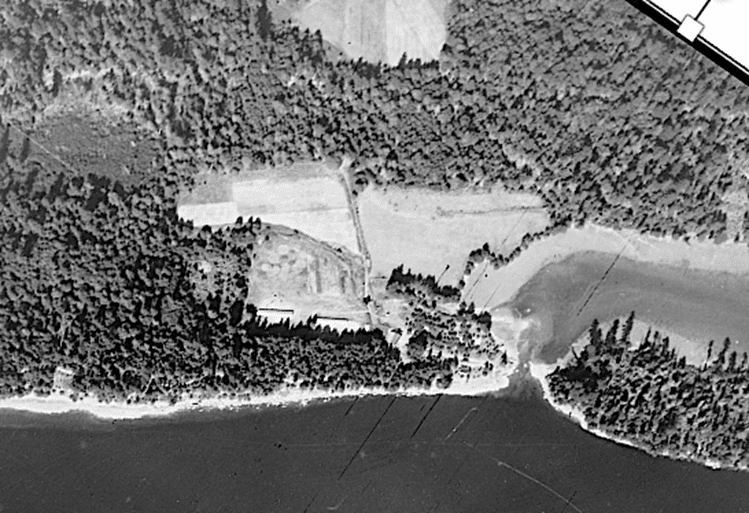
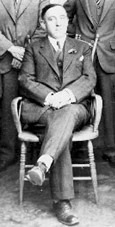
In 1924 R.G. Jessup deeded the property to his wife Emma Margaret Jessup who in 1934 divided it, selling the western 55 acres to Wymond Woverton Walkem and retaining the remainder which contained Page Point, the farm and much of the foreshore. Walkem was Mayor of Ladysmith from 1922-1924 and 1934-1942.
In 1938 Mr. Krjivitsky died and the family moved to Vancouver. After the Krjivitskys left, the farm was apparently rented out again for a short time to a family called McMillan and when they left it remained vacant until 1948. At that time, a hole had been cut in the wall of the one room Page house and it was being used as a barn.
The property was put up for sale with the asking price for 105 acres including Page Point and 2000’ of waterfront being $3,000 ($30 per acre).
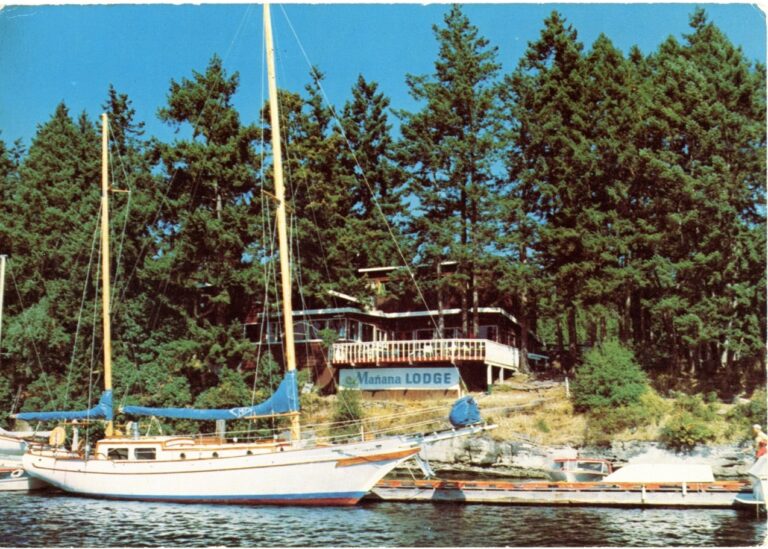
Harry Olmstead purchased the property in 1948 and in the same year deeded it to his wife Zella and mother-in-law Harriet Elizabeth McCall. The Olmsteads were a Campbell River couple who had been living aboard and chartering their boat ‘Almaro’. They pulled down the remains of the original Page house and, with the help of neighbours and friends Frank Davis and Bob and Audrey Scofield, built a lodge in a rustic Spanish style of hand-hewn logs and cedar with huge windows. This they called Mañana Lodge. There were four rooms to rent, one suite, a coffee bar and a dining lounge with a ten-foot stone fireplace and large open sundeck. All the building materials came from the site with rocks brought up from the shore. Interior decorating was done by Ron Grouhel, a young local artist, who painted murals and installed totem pole art in the guest rooms. He also created a much remembered hammered copper plaque with a calla lily and circle design which for some reason later became buried in one of the walls. It was ‘discovered’ during renovations in 1999 and put on display: unfortunately its present whereabouts are unknown. Construction of the marina also started in 1948, with local David Weatherell being the first customer wintering his fish boat there during the winter of 1948/9.
Mamie Moloney Boggs, a well known columnist, wrote a lovely article in the Vancouver Sun circa 1949 describing the newly completed lodge and its attractions (see Backlund brochure).
In 1950, David Weatherell helped with the renovations of the lodge. A living room and laundry room were added.
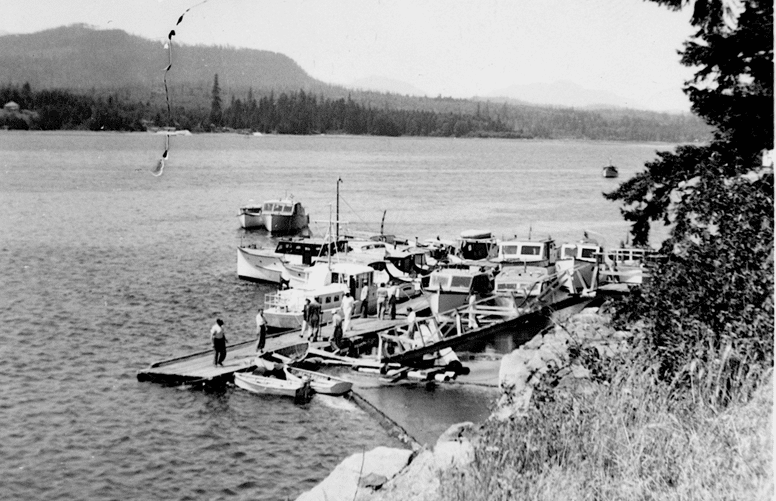
In 1955 the Olmsteads partitioned out the waterfront lots, with the lodge occupying Lots 6 and 7. These were later combined into the present single lot.
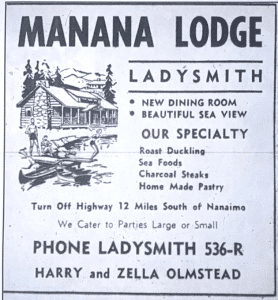
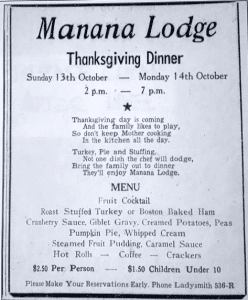
Mañana Lodge offered restaurant services and rooms available as well as the marina. The restaurant was open full time during the high season and provided regular hours on weekends during the winter months. Catering to groups and events has been part of the Manana tradition from its earliest days, this service being offered year round.
In 1958, a Disney camera crew aboard a smart white yacht named Sea Wolf, filmed in and around Mañana Lodge, apparently for part of a marine travel film. That summer 486 boats visited the marina compared to 265 the summer before. Also in 1958, Mañana Lodge was designated a seaplane base by the Aero Club of BC. Pilings were driven for docks to accommodate the increasing number of visiting boats and seaplanes. In 1960, about 150 yachts visited Ladysmith Harbor for the finish of the 123 mile International Predicted Log Race. There were 109 American and Canadian boats entered in the race plus 25 from the West Vancouver Yacht Club who hosted the event at Mañana Lodge. The event received considerable coverage in American yachting magazines as well as on television.
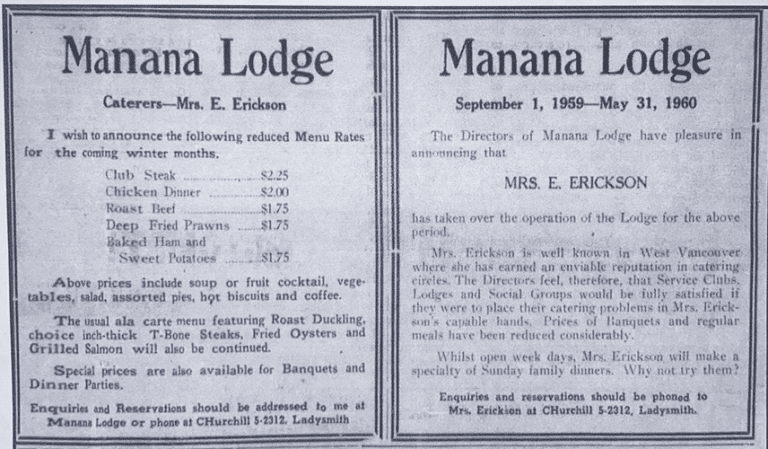
In 1959 Mrs Erickson, a marvelous cook, catered at the lodge. She took over its operation from September 1959 to May 1960. Finding it very quiet in the winter, she arranged ‘old time’ dances for the locals featuring her father’s orchestra ‘Ed’s Old Times’. People came from all around for the dancing.
Jean Cameron recalls that her mother Mary supplied the lodge with flowers from her garden down the road. With daughters Jean and Audrey , the three would help out at the Lodge, filling in as dishwashers and cleaners when large groups came. Boats usually arrived in the evening, and then the dinner rush would begin. Meals were a hearty simple fare, typically steak or chicken was served with buns, vegetables and a salad. The lodge had early nights: electricity was supplied by a generator and the lights went out when the generator was switched off.
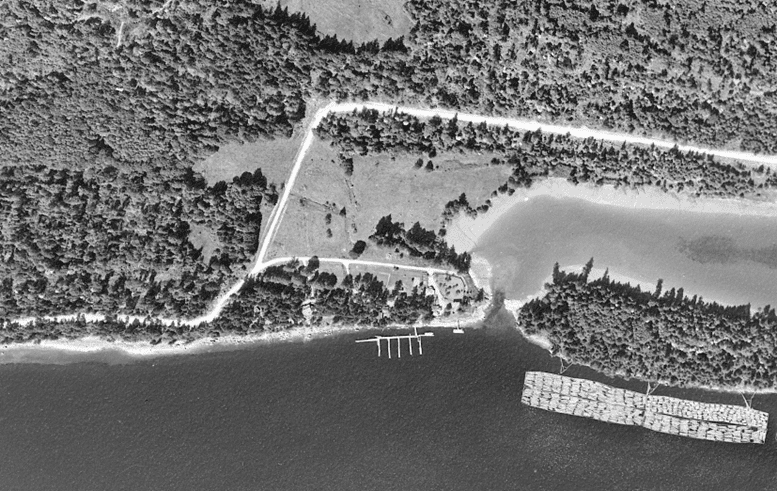
A near disaster occurred in 1961 when the 32’ Sinbad I exploded near the wharf. The boats tanks had just been filled with fuel when the blast occurred about 20’ from the dock. The occupants of the boat were assisted off and only one person received burns to her leg. Nearby boaters doused the flames with buckets and the Diamond fire chief responded as well. The boat was a total loss.
In 1962 Roland (Rolly) and Gladys Yoxall purchased Mañana Lodge from the Olmsteads. Rolly and Gladys were previously proprietors of Rolly’s Meatateria and Delicatessen on Commercial Street in Nanaimo. Under Rolly’s management, Mañana Lodge restaurant became famous for the apple pies and roast beef dinners with Yorkshire pudding. In 1962, the Chronicle reported that 30 American pleasure yachts from the Edmonds Washington Yacht Club visited the lodge and marina. American boats mostly came from Seattle, Tacoma and Portland, while Canadian boats also visited from Vancouver, New Westminster and Victoria.
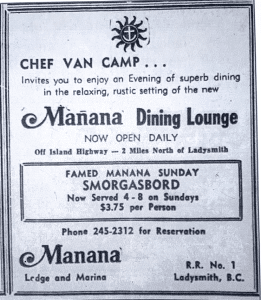
Bill and Pam Chalmers bought Mañana Lodge in 1970. They were looking for a change of environment and a change of pace from Bill’s high stress position as an executive in the Edmonton offices of one of Canada’s leading advertising agencies. Within a year and a half, Bill and Pam had made many friends in the area and throughout the Island, taking on the roles of Vice President and Secretary Treasurer of the Vancouver Island Marina Operators Association. They completely redecorated the downstairs living and dining rooms and the five rooms and suite on the second floor. Bill repowered the docks and built a small store on the dock for visiting boaters. They hired chef Hugh Van Camp and the dining room became a popular spot for local groups as well as tourists.
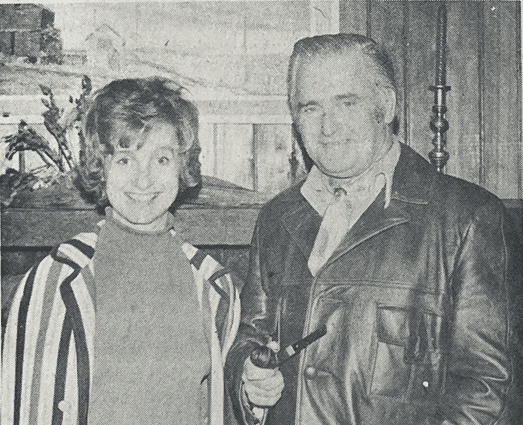
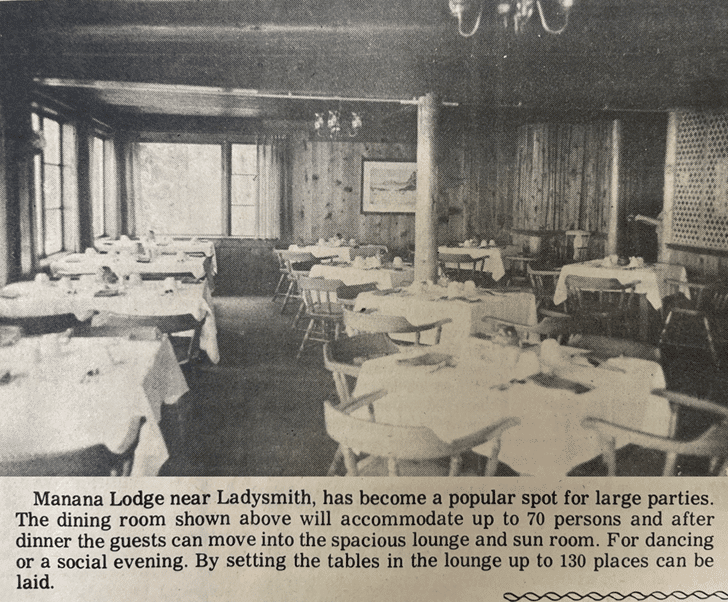
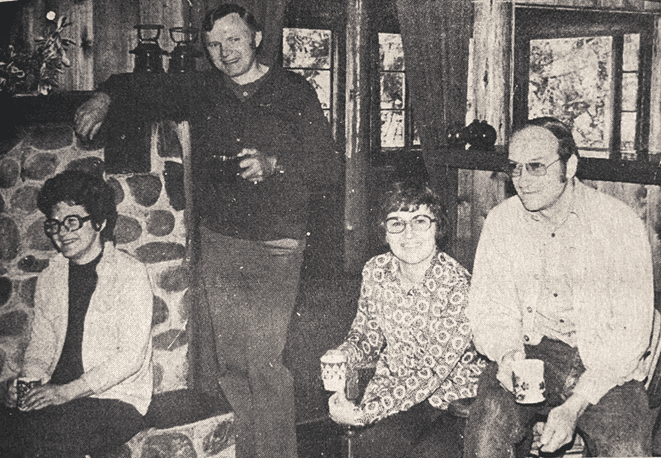
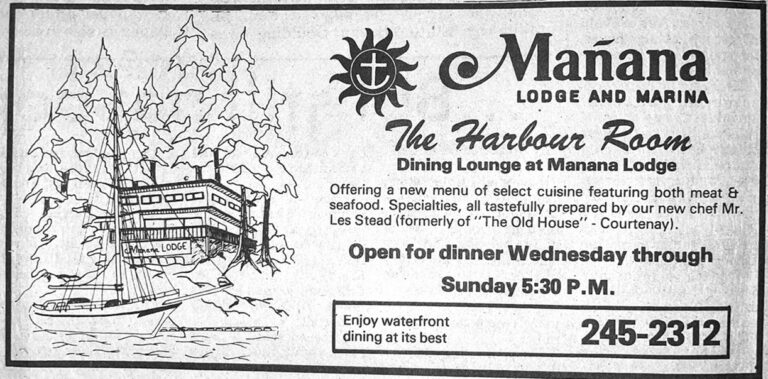
In 1974 Jim and Rene Mazurenko and George and Thelma Stickle, all friends from Edmonton, purchased Mañana Lodge and began to operate year-round. They had varied experience and Thelma and Rene found themselves learning restaurant cookery along with chef Les Stead. They eventually hired chef Richard Adby who developed a sophisticated menu.
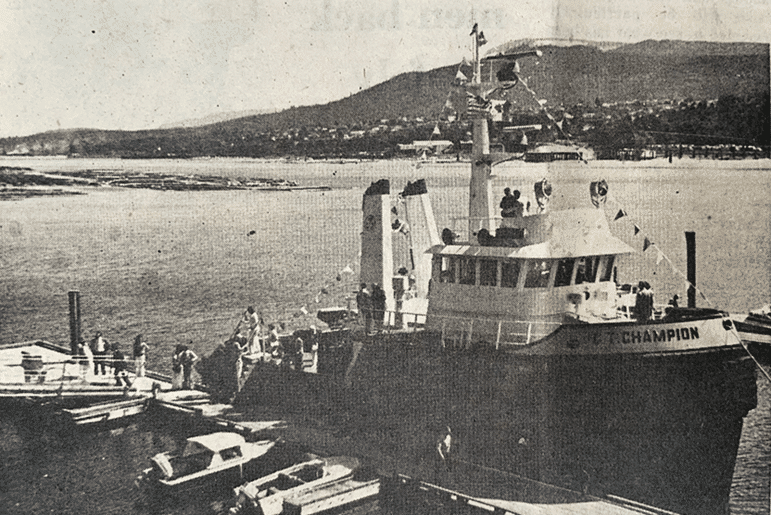
During the summer, seventy percent of restaurant customers came off visiting boats and the marina was a very busy place. The Lodge became one of the biggest employers of students in the Ladysmith area. Beginning with washing dishes, bussing tables, and setting up the dining room, as they became more skilled the students took on increased responsibilities in the restaurant and with catering. The owners’ children were put to work as well: one of the daughters, Judi Stickle, reported that she did “just about everything from waitressing to pumping marine fuel “ at her parent’s business.
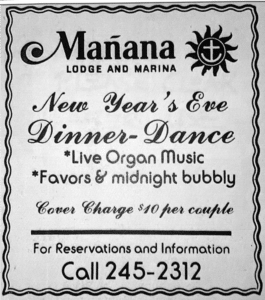
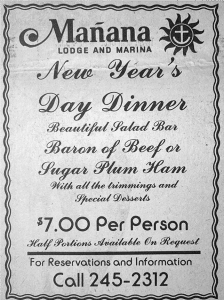
Many of these young people continued to work part time hours as needed throughout the year for private functions and advertised events such as the New Year’s Eve Dinner/Dance and the New Year’s Day Dinner.
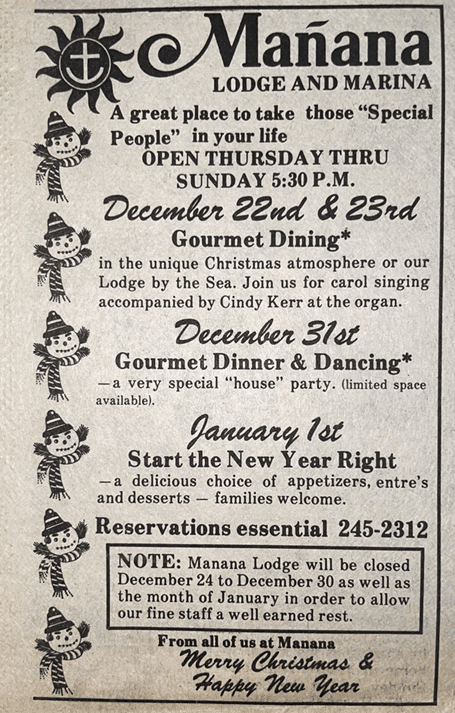
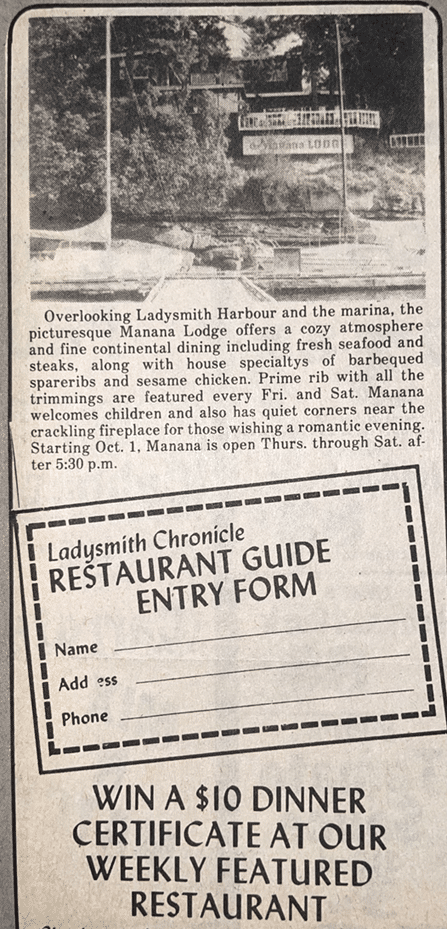
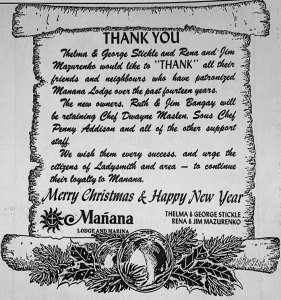
In December 1987 Jim and Ruth Bengay, who were enthusiastic boaters from White Rock, bought the lodge and partnered with Don and Gail Kanelakos. They retained chef Dwayne Maslen who had worked for the previous owners.
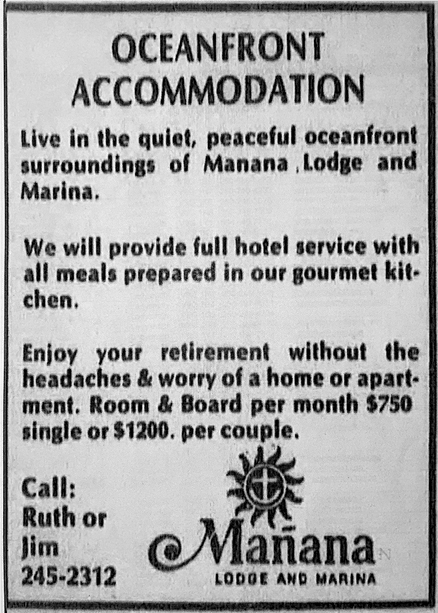
In a new departure for the Lodge, the Bengays advertised room and board to enjoy retirement without the headaches and worry of a home or apartment. Rates were $750 per month single or $1,200 per month couple. The degree of take-up of this offering is uncertain.
Patronage of the Lodge grew through word of mouth and guests were said to have come from Poland, Germany, Switzerland and France. In 1992 an application for a marine pub licence was rejected by the Cowichan Valley Regional District, this following the results of a neighbourhood survey where less than 60% of respondents were supportive and receipt of a petition by First Nation band members against the proposal. Also in 1992, a 17’ power boat burned near the dock after being refuelled, with two people being treated for burns.
Lawrence and Lexie Lambert purchased Mañana Lodge in 1999. They did extensive renovations and renamed the lodge ‘Page Point Inn’. Rooms were named after Ladysmith notables. A deck was added: the kitchen was redone and celebrated chefs greatly enhanced its reputation. The marina was rebuilt in a remarkable operation which saw the new structure fabricated on land at Slack Point, across Ladysmith Harbour, and floated into position in a one day operation.
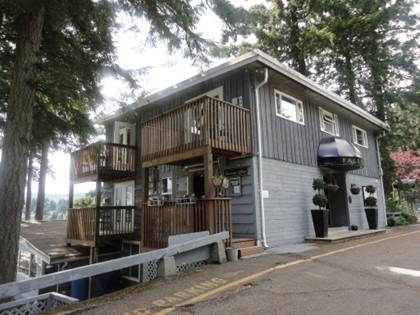
When the Lamberts took over operation of the lodge, neither had any experience in the hospitality or restaurant industry. Lambert stated that they became connected with other restaurants and inns in the area and attributed regular get togethers with this group as very helpful in their developing the required skills to put their vision for the business in motion. They continued to provide the restaurant services to local residents and the international boating community as well as catering to groups and events.
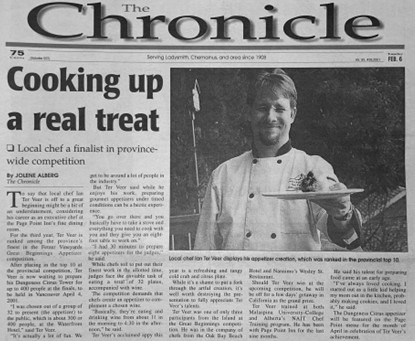
A series of world class chefs brought forward the Lamberts’ vision of fine dining and creating the West Coast Experience with local produce, meats and seafood. Ian Ter Veer brought a combination of talent, training and experience to the cuisine at Page Point Inn. He maintained an herb garden outside the kitchen door to provide for the Inn’s needs.
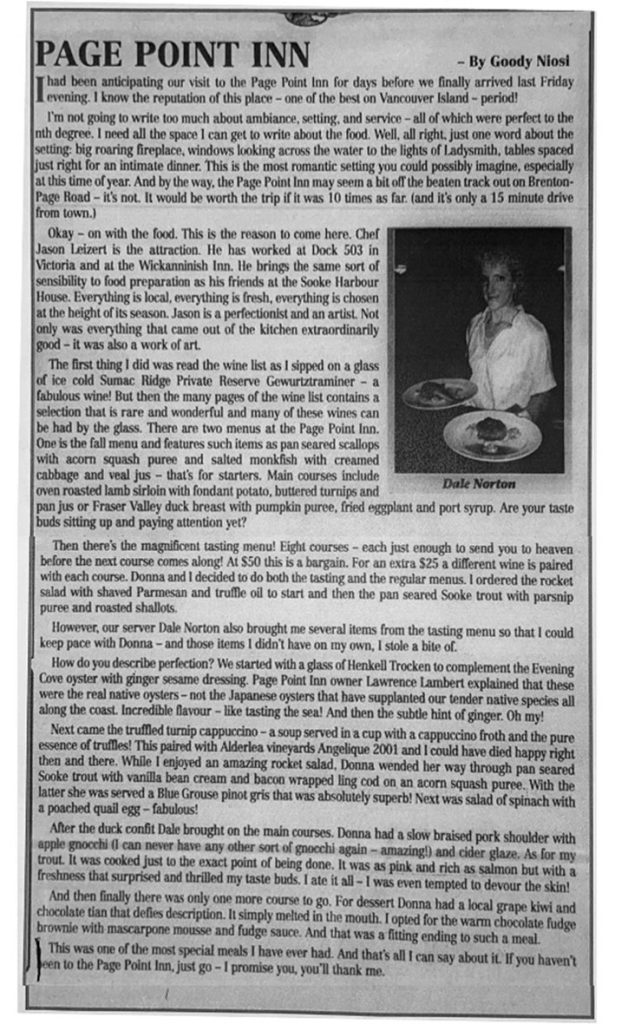
Renowned chefs such as Jason Leizert and Steve Mugridge continued the vision of locally sourced and creative cuisine in their turns heading the food services, with the results leading to some ecstatic reviews. Celebrities such as the Premier of British Columbia, Ujjal Dosanjh, counted amongst the luncheon guests.
Lawrence Lambert , a consulting engineer and owner of Pureleau Industries which specialised in the design of high-tech septic treatment facilities, was also a sailor and part owner of the 12 meter yacht ‘Dame Pattie’ which had raced for the America’s Cup off Rhode Island in 1967 [the vessel was named by its original Australian owners ‘Dame Pattie ‘ after the wife of Australian Prime Minister Sir Robert Menzies].
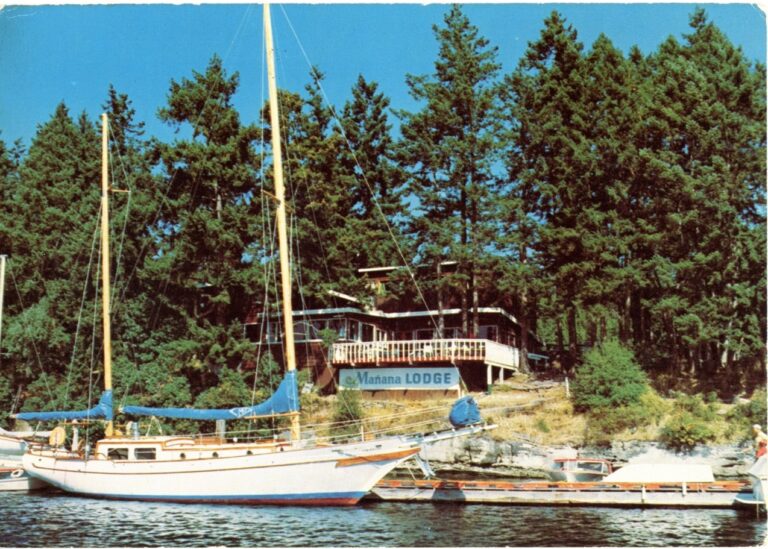
Photo: Michael Dean
In July 2002 a race between the ‘Dame Pattie’ and the ‘Geronimo’, which had raced for the America’s Cup in 1987 off Freemantle, Australia, took place in Baynes Sound outside of Comox Harbour: Dame Pattie took the honours. In 2005 the ‘Geronimo’ and the ‘Age of Russia’ (the only America’s Cup yacht ever to be built in Russia – but which never competed for it), both owned by Simon Hadley, joined the ‘Dame Pattie’ moored for the summer at the Page Point Inn with sail training and races being held every weekend.
In June 2007 Architect and Developer Daniel Maloney, representing a group of investors, bought the Page Point Inn. The Lamberts were to stay on as partners in a redevelopment project slated for the site in which Moloney proposed development of 22 high end waterfront condominiums expansion of the marina to accommodate super yachts and a Harbour Air stop. He formally requested access to town owned water and sewer utilities on the west side of the harbour: Ladysmith Council was willing to consider this request. Plans eventually included a dedicated sewage treatment plant and a desalination plant for water supply. Despite progressing through various stages, these expansion and improvement plans did not materialise
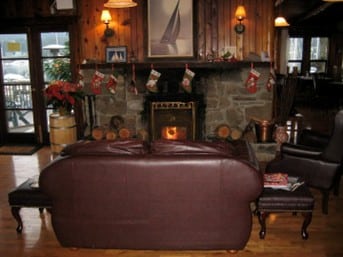
In 2010, after a period of closure, the restaurant , now called the Page Point Bistro, re-opened under the management of Sandy and Robert Wilkinson in July 2010. They continued to manage it until October 2015.
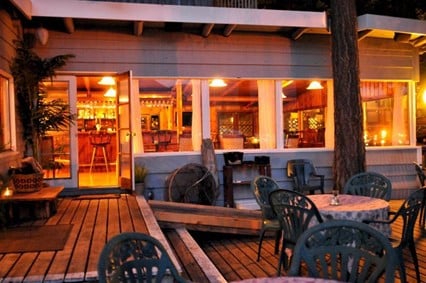
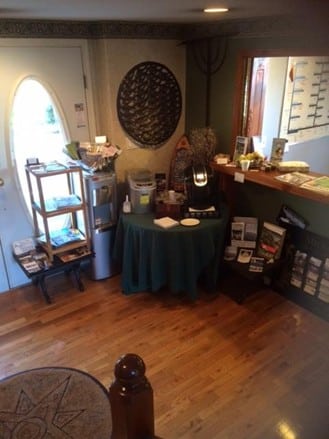
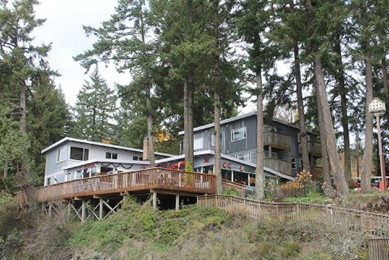
In 2019, Moloney, in a change of ownership, renamed the Lodge ‘Raven Point Inn’. The restaurant re-opened as ‘The Boat Shed Waterfront Grill’ in 2020 with an extensive menu.
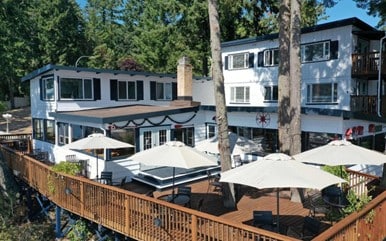
Unfortunately it was not to be. After a succession of chefs, in October 2022 the Boat Shed restaurant closed.
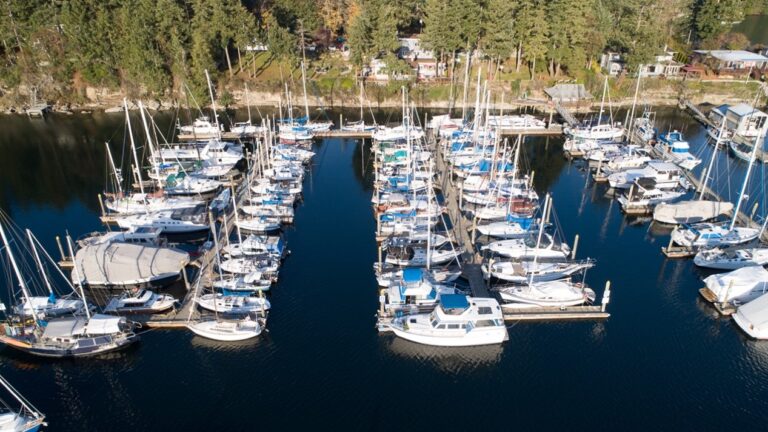
In 2023 the present owners, FMC Holdings Ltd. and the Coast Salish Development Corporation, formed a general partnership to jointly develop and operate the property, renaming it ‘Mañana Resort and Marina’. This combination of FMC’s expertise in development and long-term planning with the Coast Salish communities’ deep cultural knowledge and commitment to local stewardship aims to create a sustainable, inclusive waterfront destination that supports economic growth, respects Indigenous heritage, and serves as a model for collaborative development in the region.
Significant upgrades to the onshore amenities include renovation of the Inn, rebuilding the 1948 Bar and Bistro restaurant, and landscaping an adjacent garden event space to host weddings and community events. Other shoreside developments include utility upgrades, construction of a new laundry/washroom building to serve the marina, parking lot reconfiguration, marina access improvements, additional landscaping, and installation of signage reflecting the name change to ‘Mañana Resort and Marina’.
Redevelopment of the marina focuses on upgrading the existing infrastructure to improve functionality, safety, and visitor experience. This phase includes the removal and full replacement of the aging docks with modern, durable float structures designed to accommodate a range of vessel sizes. A newly constructed gangway enhances accessibility from land to water, while upgraded plumbing and electrical systems support increased capacity and better service delivery for both transient and long-term moorage. A welcome float serves as a central gathering point for boating groups, providing a dedicated space for community engagement, marina orientation, and seasonal events. These enhancements are a critical step in positioning the Mañana Resort and Marina as a premier marine destination on the coast.
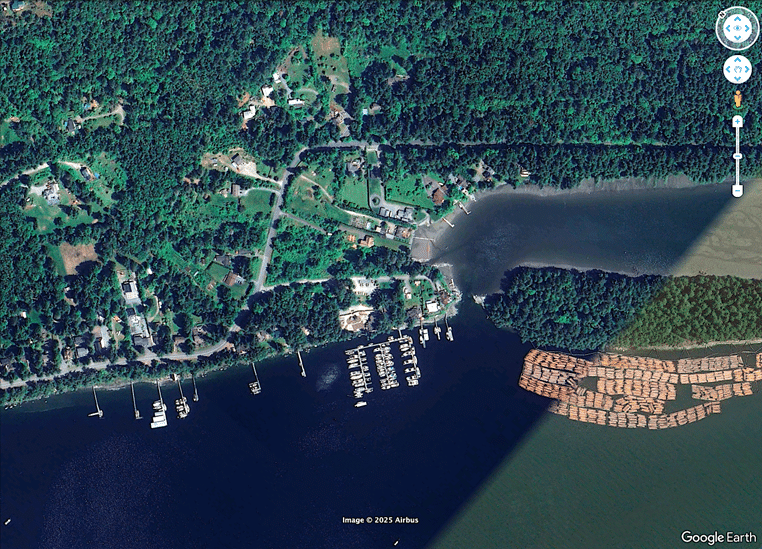
The overarching goal of the owning partnership is to transform the property into a sustainable, multi-use destination that serves locals, tourists, and the marine community year-round. The public image aims to balance heritage and renewal, honoring the site’s historic role as a community gathering place while showcasing modern upgrades and hospitality. The resort aspires to be seen as a welcoming, vibrant hub for recreation, events, and waterfront living.
We hope you find it so. Enjoy your stay with us!